
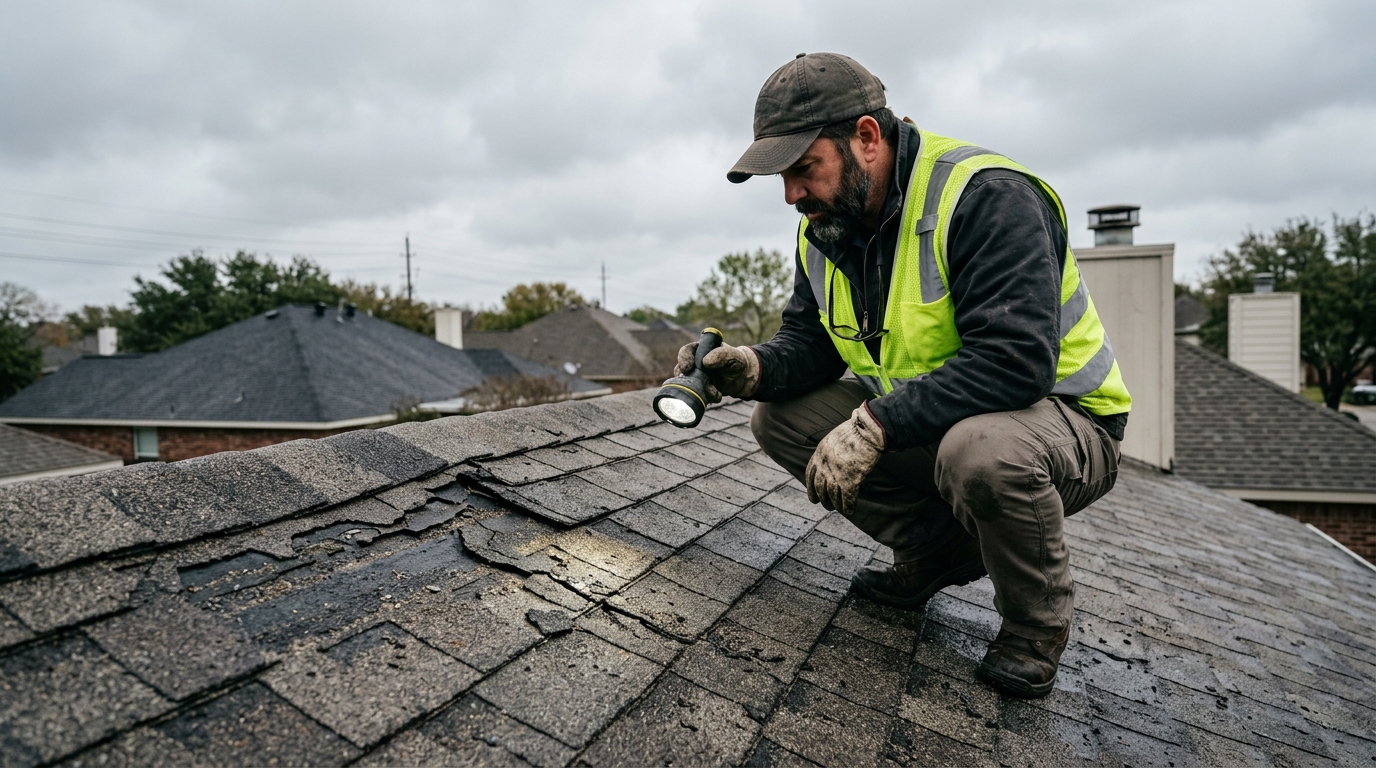
How the Texas Homeowners Insurance Claims Process Works in Texas

October 17, 2026

How the homeowners insurance claims process works in Texas

Filing a homeowners insurance claim can feel overwhelming, especially right after a storm rips through Central Texas or a pipe bursts at 2 a.m. Knowing the homeowners insurance claims process in Texas before something goes wrong puts you in a much stronger position when it counts. This post covers every step, explains your rights under Texas law, and points out the common mistakes that cost homeowners time and money.

What triggers a homeowners insurance claim

Your homeowners policy covers losses caused by specific "named perils" or, if you have an open-perils policy, anything not explicitly excluded. In Central Texas, the most common claim triggers include:

  • Wind and hail damage. The Hill Country and I-35 corridor see severe thunderstorm cells regularly, and hail claims are among the most frequent filed in Bell, McLennan, and Coryell counties.
  • Water damage from plumbing failures. A burst pipe, faulty water heater, or washing machine hose failure can cause tens of thousands of dollars in structural damage.
  • Theft and vandalism. Covered under most standard HO-3 policies for both the structure and personal property inside.
  • Fire and smoke. Covered under virtually every homeowners policy. Smoke damage to walls, HVAC, and belongings is often underestimated at first look.
  • Falling objects and tree damage. After a storm, a downed oak can punch through a roof quickly, and the resulting water intrusion compounds the damage.

One thing that surprises many Texas homeowners: flood damage is not covered under a standard homeowners policy. If your home sits in or near a floodplain around Lake Belton, the Leon River, or the Bosque River drainage, you need a separate policy. Our Central Texas flood insurance guide explains those options in detail.

Step-by-step: filing your claim in Texas

Document everything before you touch anything

Your first move after the immediate danger has passed is to document the damage thoroughly. Walk through the affected areas with your phone or camera and record video. Take still photos of every damaged surface, object, and structural element from multiple angles. Do this before any cleanup begins. Insurance adjusters work from evidence, and photos timestamped right after a loss are worth far more than your memory of what things looked like two weeks later.

Make a written list of damaged or destroyed personal property. Include the item, approximate age, and what it would cost to replace it. If you have receipts or credit card statements, pull them. If you already have a home inventory saved somewhere (a spreadsheet, a video walkthrough on cloud storage), now is when it earns its value.

Prevent additional damage, but save everything

Texas insurance law requires policyholders to take reasonable steps to prevent further damage after a covered loss. If a storm opens a hole in your roof, cover it with a tarp. If a pipe burst, shut off the water and extract standing water. Keep every receipt from any emergency repair work because these costs are typically reimbursable under your policy's "additional living expenses" or "protection of property" provisions.

Do not throw away damaged materials until the adjuster has seen them. Insurers have denied or reduced claims because damaged items were discarded before inspection. When in doubt, set damaged materials aside and document them first.

Notify your insurance company promptly

Report the loss to your insurer as soon as reasonably possible. Most Texas policies require "timely" notice, and while the standard is not a hard deadline in days, waiting weeks or months can give the insurer grounds to argue the delay prejudiced their investigation. Call your carrier's claims line, get a claim number, and write down the name of every person you speak with.

Under the Texas Insurance Code, your insurer must acknowledge receipt of your claim within 15 days of receiving written notice. They then have 15 business days to accept or deny the claim after receiving all required items, statements, and forms. If they need more time, they must notify you and provide a reason. These are statutory deadlines and your insurer is legally bound by them.

Meet with the adjuster

The insurance company will assign an adjuster to inspect the damage. This may be a staff adjuster who works directly for the carrier or an independent adjuster the carrier hires. Either way, their job is to assess the scope of loss and estimate repair costs using pricing software (Xactimate is the industry standard).

Be present for the inspection. Walk the adjuster through all the damage you documented. Point out things that might be easy to miss: attic insulation soaked from a roof breach, secondary water damage in wall cavities, HVAC damage from hail to the condenser coils. If an area of damage gets missed in the initial inspection, it can delay or complicate your settlement.

You have the right to get your own repair estimates from licensed contractors. If your contractor's estimate and the adjuster's estimate are far apart, that gap is worth addressing before you accept a settlement. Hiring a licensed public adjuster is another option if the claim is complex or disputed, though public adjusters in Texas charge a percentage of the settlement, typically 10 percent or more.

Understand your settlement offer

Once the adjuster completes the estimate, the carrier will issue a settlement offer. Read it carefully before you sign or cash anything. Pay attention to these items:

  • Actual cash value (ACV) vs. replacement cost value (RCV). If your policy pays ACV, depreciation is subtracted from the settlement. If it pays RCV, you receive the full cost to replace or repair with like materials. Most standard policies pay RCV for the dwelling and ACV for personal property unless you added an RCV endorsement.
  • Your deductible. The amount is subtracted from the settlement. In Texas, many policies now carry a separate wind and hail deductible calculated as a percentage of your home's insured value (often 1 to 2 percent) rather than a flat dollar amount. On a $300,000 home with a 2 percent wind/hail deductible, that is $6,000 out of pocket before the carrier pays anything.
  • Recoverable depreciation. With an RCV policy, the carrier often releases depreciation in two payments: an initial ACV payment, then the "recoverable depreciation" after you submit proof that repairs were completed.

Appeal or dispute if the settlement is wrong

Texas policyholders have real options if they believe a claim was underpaid or wrongly denied. First, file a written dispute with your carrier explaining the discrepancy and attaching supporting evidence (contractor estimates, photos, receipts). Many disputes resolve at this stage.

If the dispute is not resolved, Texas homeowners policies must include an appraisal clause by law. Each side selects a competent appraiser, those two appraisers choose an umpire, and the panel determines the value of the loss. The appraisal process is binding and does not require a lawsuit. It is often faster and less expensive than litigation.

For more serious bad-faith situations, Chapter 541 and Chapter 542 of the Texas Insurance Code provide remedies including actual damages, penalty interest (18 percent per year on overdue payments under 542), and in some cases attorney fees. The Texas Department of Insurance also takes complaints at tdi.texas.gov and can investigate insurer conduct.

Common mistakes Texas homeowners make during claims

  • Signing broad releases too quickly. Accepting an initial payment and signing a release may close your claim entirely, even if hidden damage surfaces later. Read before you sign.
  • Not filing because the damage "looks minor." Small roof damage left unrepaired often leads to major water intrusion over time. If a covered peril caused the damage, filing may be worth it regardless of how minor it seems initially, particularly if repair costs exceed your deductible.
  • Failing to track additional living expenses (ALE). If your home is uninhabitable while repairs happen, your policy likely covers hotel stays, meals above your normal food costs, and other reasonable expenses. Keep every receipt and submit them.
  • Letting a contractor file the claim for you. Some contractors offer to "handle the insurance" in exchange for an assignment of benefits. Texas law has tightened rules around assignment of benefits in recent years. Understand what you are signing before giving a contractor authority over your insurance proceeds.
  • Waiting too long to file. Texas has a two-year statute of limitations for filing suit on a homeowners claim from the date the damage occurred. That sounds like a long time, but disputes and repairs can drag on. Do not let a disputed claim sit unresolved past that window.

How your deductible and coverage limits affect the outcome

Two policy details shape your claim outcome more than anything else: your deductible and your dwelling coverage limit. Many Central Texas homeowners set their dwelling limit years ago and never adjusted it. Construction costs in the Killeen, Temple, and Waco markets have risen sharply in recent years. A home insured for $200,000 in 2018 may cost $280,000 or more to rebuild today. If your coverage limit is lower than your home's actual replacement cost, you will pay the difference out of pocket after a total loss.

This is exactly the kind of gap that an independent agent can catch during a policy review. If you have not looked at your coverage limits recently, it is worth a conversation before you have to file a claim. A quick annual insurance review can catch coverage shortfalls before they become expensive surprises.

Your deductible choice also matters. A higher deductible lowers your premium but raises your out-of-pocket cost at claim time. For smaller losses, many homeowners choose not to file claims because doing so can affect your claims history and potentially your renewal rates. Understanding that math before a loss helps you make a smarter deductible choice upfront.

Tips for keeping your claim moving forward

The biggest frustration most Texas homeowners report during the claims process is delays. A few habits can keep things moving:

  • Respond to adjuster requests quickly. Every day you delay returning a form or a signed authorization adds another day to your claim timeline.
  • Keep a claim log. Record the date, time, and summary of every phone call, email, and letter. Note names and titles. This log is useful if a dispute arises later.
  • Follow up in writing. If you have a phone conversation about something important, send a brief email summarizing what was discussed. It creates a paper trail.
  • Get contractor estimates in writing. Verbal estimates do not help you dispute an adjuster's assessment. Get itemized written estimates from at least two licensed contractors.

Work with Winkler Insurance Agency on your homeowners coverage

Understanding the homeowners insurance claims process in Texas is easier when you have a local agent involved before a loss happens, not just after. At Winkler Insurance Agency, we are an independent agency, which means we compare coverage options and pricing across multiple carriers to find the right fit for your home and your budget. We serve homeowners across Temple, Killeen, Harker Heights, Belton, Waco, and the surrounding Central Texas communities.

If you are shopping for a new homeowners policy, reviewing your current coverage, or have questions about what your deductible really means, we are glad to help. You can explore your options on our homeowners insurance page, or reach out directly to our team at 254-771-5600 or through our contact page. A few minutes now can save a lot of frustration when you need to file a claim.

Telephone icon with speech bubble.

Get A Quote

At Winkler Insurance Agency, securing your future is simple. Ready to protect what matters? Contact us for a quick quote!

Black telephone handset icon.

Kelly

Speak to Kelly 24/7

Microphone icon.

Microphone ready


Black checkmark.

Start your custom insurance quote

Black checkmark on a white background.

Instant answers to your insurance questions

Black check mark.

Schedule appointments or follow-ups

Person holding a shield with a check mark, representing protection or security.

Personal Insurance

From auto and homeowners to renters and umbrella policies, we help protect your family and property. Let’s find coverage that fits your life.

Buildings, coins with dollar sign, and shield with checkmark; financial security concept.

Commercial Insurance

We customize policies for your industry's risks, like general liability and workers' comp, ensuring you can run your business worry-free.

Share this article

Recent Posts

Closeup of hail-damaged asphalt shingles on a Central Texas home roof after a storm
By Winkler Insurance Agency • October 14, 2026
Learn how to file a roof damage insurance claim in Texas, avoid common denials, and protect your Central Texas home. Winkler Insurance Agency explains every

A rideshare driver in a sedan at a Central Texas intersection, phone mounted on dashboard showing a rideshare app
By Winkler Insurance Agency • October 11, 2026
Driving for Uber or Lyft in Texas? Learn how rideshare insurance fills the coverage gap and protects you in all phases. Get quotes from Winkler Insurance

A Texas driver's license and car keys resting on a courthouse counter with paperwork visible in the background
By Winkler Insurance Agency • October 8, 2026
Need SR-22 insurance in Texas? Learn who needs it, how much it costs, and how long you carry it. Winkler Insurance Agency shops multiple carriers for you.

Aerial view of a busy highway interchange in Round Rock, Texas on a sunny afternoon
By Winkler Insurance Agency • October 5, 2026
Shopping for car insurance in Round Rock, TX? Learn what coverage you need, what drives rates locally, and how to compare quotes. Get help from Winkler
A car parked on a sunny residential street in Copperas Cove, Texas, with a clear blue sky overhead
By Winkler Insurance Agency • October 2, 2026
Find the right auto insurance in Copperas Cove, TX. Learn Texas minimums, coverage tips for military families, and how to lower your rate. Get a free quote
Single-story brick home on a quiet residential street in Copperas Cove, Texas, under a partly cloudy Central Texas sky
By Winkler Insurance Agency • September 29, 2026
Learn what home insurance in Copperas Cove, TX should cover, from wind and hail to flood risks. Get quotes from Winkler Insurance Agency today. today today
A well-kept brick home in Belton, Texas on a sunny afternoon with a clear blue sky and green lawn
By Winkler Insurance Agency • September 26, 2026
Get the right home insurance in Belton, TX. Winkler Insurance Agency compares carriers to protect your home from hail, flood, and wind risks in Bell County.
Brick ranch-style home in a Round Rock Texas neighborhood under a partly cloudy spring sky
By Winkler Insurance Agency • September 23, 2026
Learn what home insurance in Round Rock, TX really covers, how hail deductibles work, and how to avoid gaps. Compare quotes with Winkler Insurance Agency today.
A single-story brick home in Harker Heights Texas on a clear sunny afternoon with a well-kept lawn and a two-car garage
By Winkler Insurance Agency • September 20, 2026
Learn what home insurance in Harker Heights, TX covers, what it costs, and how to avoid coverage gaps. Get a free quote from Winkler Insurance Agency today.
A Texas home with a new roof and storm shutters on a sunny afternoon in a Central Texas neighborhood
By Winkler Insurance Agency • September 18, 2026
Discover how Texas homeowners can lower their insurance premium with real discounts for bundling, roof upgrades, and more. Get a free comparison from Winkler