
What Affects Your Car Insurance Rates in Texas? Coverage Explained

June 15, 2026

Why auto insurance rates in Texas vary so much from driver to driver

If you have ever compared notes with a neighbor or coworker and discovered your auto insurance rates in Texas are completely different from theirs, you are not imagining things. Two drivers in the same ZIP code, driving similar vehicles, can pay hundreds of dollars more or less per year than each other. The reason is a long list of rating factors that insurers weigh differently, and understanding those factors helps you make smarter decisions about your coverage.

Your driving record carries the most weight

Texas insurers look closely at your history behind the wheel. A clean record typically earns you the lowest available rates, while violations and claims push premiums up, sometimes significantly.

  • At-fault accidents: A single at-fault collision can raise your premium by 30% to 50% or more at renewal, and the surcharge often stays on your policy for three years.
  • Moving violations: Speeding tickets, running red lights, and reckless driving citations all signal elevated risk to carriers. A single speeding ticket can add $200 to $400 per year depending on your current rate tier.
  • DWI or DUI convictions: Texas takes impaired driving seriously, and so do insurers. A DWI conviction can more than double your premium and will likely trigger a requirement for an SR-22 certificate filed with the Texas Department of Public Safety.
  • Lapse in coverage: Even a short gap in auto insurance history tells carriers you are a higher risk. Texas law requires continuous liability coverage, and a lapse can push you into a higher rate tier.

Where you live and park your car in Texas

Your address matters more than most people realize. Carriers use your garaging ZIP code to assess the local claims environment, theft statistics, traffic density, and weather exposure.

Central Texas has its own risk profile. Drivers in Killeen, Temple, Belton, and Waco see rates influenced by local accident frequency on highways like I-35 and US-190, hail storm exposure in the spring and summer months, and theft rates that vary by neighborhood. A rural address near Troy or Cameron will generally rate differently than a high-traffic corridor in Harker Heights or Copperas Cove, even for the same driver with identical coverage.

Hail is worth calling out specifically. The stretch of Central Texas between Waco and Killeen sits inside what storm researchers sometimes call "Hail Alley." Comprehensive claims tied to hail damage are a real cost driver across the region, and insurers price that risk into rates for drivers who park outside or lack a garage.

The vehicle you drive affects your premium in multiple ways

Carriers rate vehicles based on how much they cost to repair, how often they are stolen, and how they perform in crashes. These judgments come from years of claims data.

  • Make, model, and trim: A base trim pickup truck with widely available parts typically costs less to insure than a luxury SUV with specialized sensors and cameras built into every bumper. Repair costs for modern vehicles with advanced driver-assistance systems are genuinely higher.
  • Vehicle age: Newer vehicles often carry higher comprehensive and collision premiums because they cost more to replace. Older vehicles with no loan may not need those coverages at all, depending on their market value.
  • Safety ratings: Vehicles with strong crash-test ratings from the IIHS and NHTSA tend to generate fewer bodily injury claims, which can work in your favor on the liability portion of your premium.
  • Theft rates: Certain makes and models appear disproportionately in Texas theft data. If your vehicle is on that list, expect a bump in comprehensive pricing.

Driver demographics and credit history

Texas law permits insurers to use several personal factors as rating variables, and two of the most impactful are age and credit-based insurance score.

Age and experience play a significant role. Teen drivers in Texas are among the most expensive to add to a policy because the claims data is unambiguous: new drivers have more accidents. Rates typically peak for drivers under 25 and again for drivers in their late 70s, with the most favorable rates generally found in the 35 to 65 age range.

Credit-based insurance scoring is legal in Texas and widely used. This is not the same as your FICO credit score, but it draws on similar underlying data: payment history, outstanding balances, length of credit history, and new accounts. Drivers with poor credit-based insurance scores can pay two or three times more than drivers with excellent scores, even when all other factors are equal. Improving your credit over time is one of the slower but more powerful levers for reducing your auto insurance costs.

Marital status also factors in. Statistically, married drivers file fewer claims than single drivers, and carriers reflect that in pricing. It is a small factor, but it is real.

Coverage choices and deductible levels

The structure of the policy you choose has a direct and immediate effect on what you pay. This is one area where you have meaningful control.

Texas requires drivers to carry at minimum 30/60/25 liability coverage : $30,000 per person for bodily injury, $60,000 per accident, and $25,000 for property damage. Those minimums are often not enough to cover the full cost of a serious accident on a Central Texas highway, but they set the floor. The more coverage you add, the higher the premium.

  • Comprehensive and collision: Adding these coverages protects your own vehicle, but they come with deductibles you choose. A $500 deductible costs more per year than a $1,000 or $2,500 deductible. Picking the right deductible is a balance between your monthly cash flow and your ability to cover an out-of-pocket loss.
  • Uninsured/underinsured motorist coverage: Texas has a significant percentage of uninsured drivers on the road. Adding UM/UIM protection is often worth the relatively modest cost increase.
  • Personal injury protection (PIP): Texas requires insurers to offer PIP coverage, though you can reject it in writing. It pays medical expenses and lost wages regardless of fault, which can be valuable if you do not have strong health insurance.

For a closer look at how Texas coverage requirements work and what you actually need, the post Texas auto insurance requirements explained walks through the specifics in plain language.

Annual mileage and how you use your vehicle

The more miles you drive, the more exposure you have to accidents. Carriers ask about your annual mileage and, increasingly, offer usage-based programs that track actual driving via a mobile app or plug-in device. Drivers who log under 7,500 miles per year often qualify for low-mileage discounts that can take a meaningful chunk off the premium.

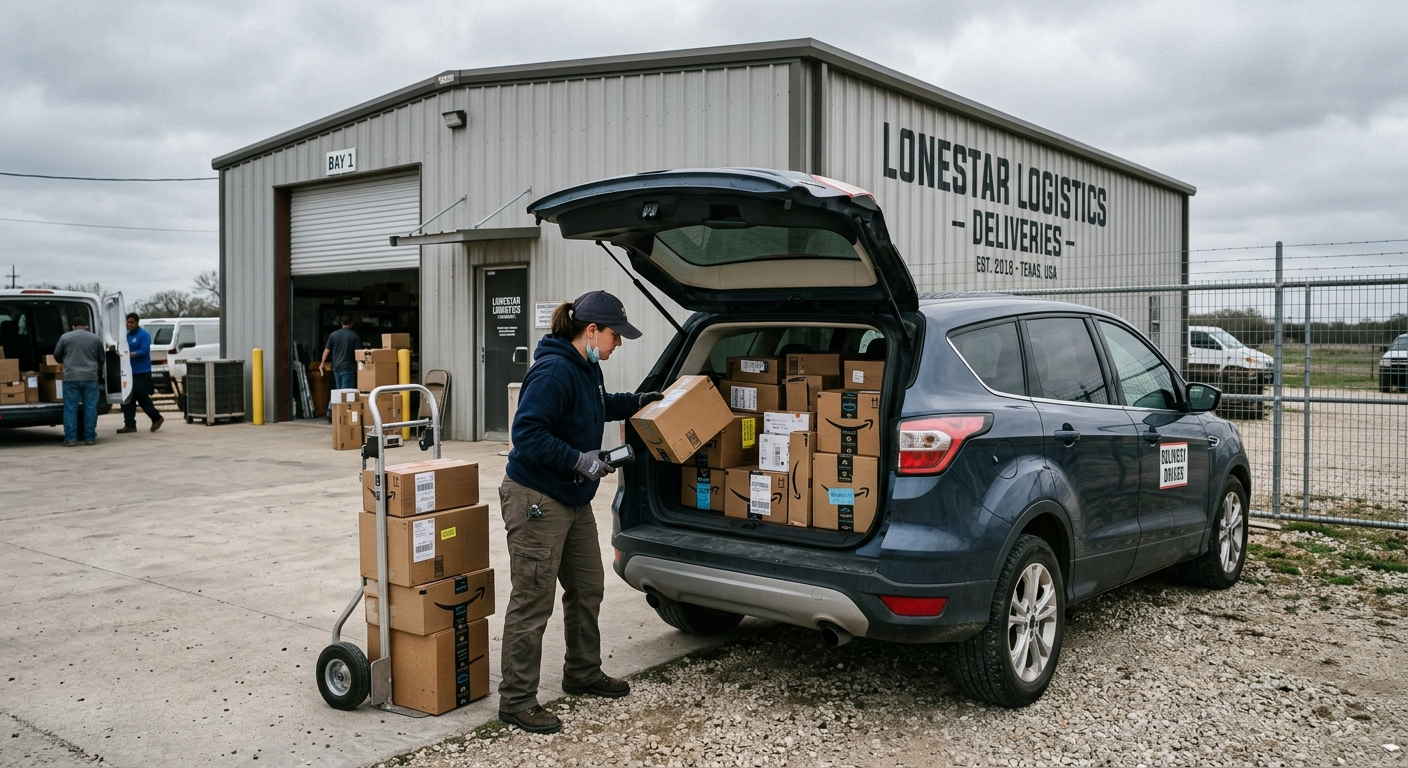
How you use the vehicle matters too. A personal vehicle used for an occasional commute rates differently than one used for deliveries, rideshare driving, or transporting clients. If you use your personal vehicle for any business purpose, it is worth talking with your agent about whether your personal policy actually covers those trips. In some cases, a commercial auto policy may be the right fit.

Discounts that offset the factors working against you

Most carriers offer a range of discounts that can partially offset rate-increasing factors. You often have to ask, or work with an independent agent who knows to look for them.

  • Multi-policy (bundling): Combining auto with homeowners, renters, or another personal line is one of the most consistent discount categories. Savings of 10% to 15% are common.
  • Good student: Young drivers on the policy who maintain a B average or better qualify with most carriers.
  • Defensive driving course: Completing a Texas-approved defensive driving course can earn a modest credit and may also reduce a violation's impact on your record.
  • Vehicle safety features: Anti-lock brakes, automatic emergency braking, and anti-theft systems all carry potential credits depending on the carrier.
  • Continuous coverage: Some carriers reward drivers who have maintained uninterrupted auto insurance for three or more years with a loyalty discount.

If you want a more detailed action plan for trimming costs, the post 5 ways to lower your auto insurance premium covers practical steps you can take right now.

Work with an independent agent who compares carriers for you

Understanding the factors that drive your auto insurance rates in Texas is useful, but acting on that knowledge requires access to multiple carriers and someone who knows how each one weighs these variables. Different insurers price the same driver differently, sometimes by hundreds of dollars per year, and the only way to find out is to compare.

At Winkler Insurance Agency , we are an independent agency serving drivers throughout Central Texas, including Temple, Killeen, Waco, Belton, Harker Heights, Copperas Cove, and the surrounding communities. Because we work with multiple carriers rather than being tied to one company, we can shop your profile across the market and find the coverage that fits both your needs and your budget.

Ready to see what your rates actually look like? Contact Winkler Insurance Agency online or call us at 254-771-5600 to get a personalized auto insurance comparison. There is no obligation, and a real person answers the phone.

Telephone icon with speech bubble.

Get A Quote

At Winkler Insurance Agency, securing your future is simple. Ready to protect what matters? Contact us for a quick quote!

Black telephone handset icon.

Kelly

Speak to Kelly 24/7

Microphone icon.

Microphone ready


Black checkmark.

Start your custom insurance quote

Black checkmark on a white background.

Instant answers to your insurance questions

Black check mark.

Schedule appointments or follow-ups

Person holding a shield with a check mark, representing protection or security.

Personal Insurance

From auto and homeowners to renters and umbrella policies, we help protect your family and property. Let’s find coverage that fits your life.

Buildings, coins with dollar sign, and shield with checkmark; financial security concept.

Commercial Insurance

We customize policies for your industry's risks, like general liability and workers' comp, ensuring you can run your business worry-free.

Share this article

Recent Posts

A black pickup truck protected with auto insurance in Temple, TX
January 26, 2026
Understand Texas auto insurance requirements and how much coverage you need. Compare liability limits, full coverage options, and ways to save on car insurance.
White houses protected with home insurance in Temple, TX
January 26, 2026
Learn how to calculate the right homeowners insurance for your Texas home. Understand dwelling coverage, liability limits, and factors affecting your policy.
Term vs whole life insurance
January 12, 2026
Choosing between term and whole life insurance? Learn the key differences, benefits, and drawbacks to decide which policy fits your goals and budget.
Lower auto insurance premium
January 12, 2026
Small changes can lead to big savings on car insurance. Discover 5 simple strategies Texas drivers use to lower their auto insurance premiums today.
What does homeowners insurance cover
January 12, 2026
Your home policy protects more than you think. Learn what homeowners insurance actually covers and what might need extra coverage in Texas.