
Flood Insurance in Denton County, TX: What Homeowners Must Know
Flood insurance in Denton County, Texas: why standard home policies fall short
Flood insurance in Denton County, Texas is one of those topics most homeowners only think about after the water is already in their living room. Denton County sits in one of the most flood-prone corridors in the state, and the gap between what a standard homeowners policy covers and what actually happens during a major rain event can cost families tens of thousands of dollars. If you own a home here, understanding flood coverage matters.
The flood risk is real in Denton County
Texas ranks first in the nation for flood fatalities and flood-related property losses, and Denton County contributes heavily to those numbers. The county is threaded with tributaries of the Trinity River system, including Elm Fork and its many feeder creeks. Rapid development across cities like Denton, Lewisville, Frisco, and Little Elm has reduced natural absorption, so runoff that once soaked into farmland now flows fast into neighborhoods.
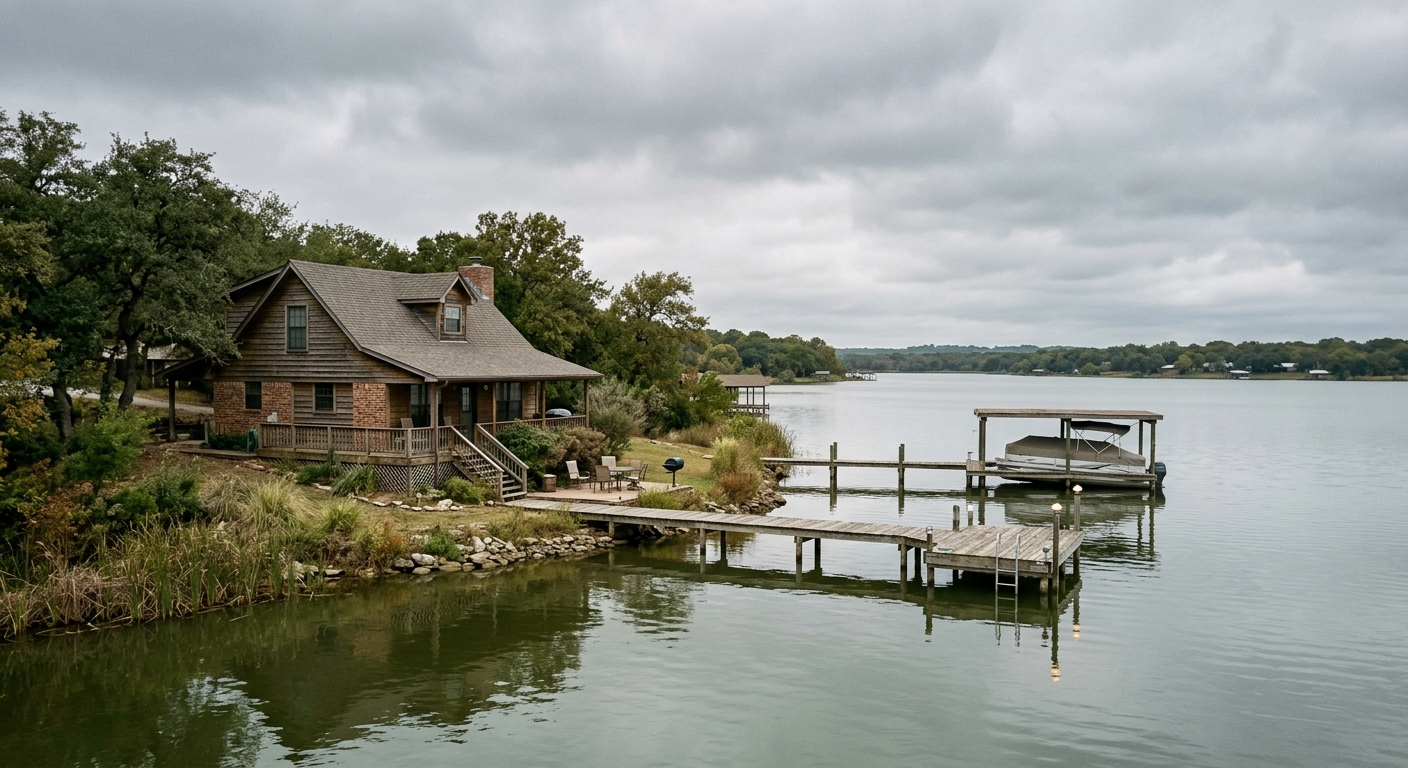
FEMA flood maps for Denton County show large stretches of Special Flood Hazard Areas (SFHA), particularly along Lewisville Lake, Lake Lewisville Dam spillway zones, and low-lying corridors near Lake Ray Roberts. What surprises most homeowners: roughly 25 to 30 percent of all flood claims nationally come from properties outside mapped high-risk flood zones . Moderate-risk zones in Denton County have flooded repeatedly in recent years, including during major events tied to tropical moisture pushing up from the Gulf.
A Zone X designation on a FEMA map does not mean your home will never flood. It means the statistical probability is lower, not zero.
What a standard homeowners policy does not cover
Most Denton County homeowners are surprised by how sharply the exclusions are written in a standard policy. A typical homeowners policy excludes all damage caused by flooding, surface water, storm surge, mudflow, and water that backs up from drains or sewers when the source of the backup is a flood event outside your home. This is not a loophole. It is a deliberate and clearly written exclusion that has been standard in the industry for decades.
If a creek overflows and pushes two feet of water into your home, the loss is entirely on you unless you carry a separate flood policy. Roof damage from the same storm may be covered under your homeowners policy, but the water damage to your floors, drywall, appliances, and personal belongings from flooding is not. For a closer look at what homeowners policies include and exclude, our post on what homeowners insurance actually covers breaks it down in plain terms.
How flood insurance works: NFIP vs. private market
There are two main paths to flood coverage for Denton County homeowners.
The National Flood Insurance Program (NFIP)
The NFIP is a federal program administered by FEMA and sold through licensed insurance agents. NFIP policies are available to any property in a participating community, and virtually every city and county in Texas participates. Key details for Texas homeowners:
- Building coverage limit: Up to $250,000 for the structure of a single-family home.
- Contents coverage limit: Up to $100,000 for personal belongings, purchased separately.
- Waiting period: A standard NFIP policy does not take effect until 30 days after purchase . If a storm is forecast, it is too late to bind coverage.
- No loss of use: NFIP policies do not pay for living expenses if flooding forces you out of your home.
For many Denton County homeowners, the $250,000 building cap is workable, but if your home is worth more than that, you may be exposed. The contents limit also matters. $100,000 sounds like a lot until you start pricing out kitchen appliances, furniture, electronics, and clothing.
Private flood insurance
Private flood carriers have expanded significantly in Texas over the past several years and in many cases offer advantages the NFIP cannot match:
- Higher coverage limits: Private policies can cover full replacement cost on homes valued well above $250,000, which is common in growing Denton County communities.
- Shorter waiting periods: Some private carriers offer 10 to 15 day waiting periods, and a few bind immediately in certain circumstances.
- Loss of use (additional living expenses): Many private policies include this coverage, which the NFIP does not offer.
- Broader contents coverage: Some private policies cover items like vehicles parked in a garage or finished basement contents more generously.
The trade-off is that private carriers can leave a market after a catastrophic loss season. An independent agent who shops multiple carriers can help you weigh that stability question against the cost and coverage differences.
FEMA's Risk Rating 2.0 and how it affects your premium
In October 2021, FEMA overhauled how it prices NFIP policies under a system called Risk Rating 2.0 . Before that change, premiums were based primarily on a property's flood zone designation. Under the new model, FEMA prices each property individually using factors like the home's distance from a water source, the types of flooding it could experience, the elevation of the first floor, and the cost to rebuild.
For many Denton County homeowners, this change produced mixed results. Properties in Zone X that previously paid low premiums because they were mapped outside the SFHA may now pay more because the individual risk factors indicate real exposure. Some properties in Zone AE that were significantly overpriced under the old system saw modest decreases. The main takeaway: your NFIP premium under Risk Rating 2.0 is now specific to your home, not your neighborhood.
Elevation certificates are still useful because they can help a private flood carrier price your risk more accurately, and they may support an appeal if you believe your FEMA flood zone designation is incorrect. An agent can walk you through whether getting an elevation certificate makes sense for your specific property.
Mortgage requirements and mandatory purchase rules
If your home is in a FEMA-designated Special Flood Hazard Area (zones beginning with A or V) and you carry a federally backed mortgage, flood insurance is legally required . Your lender will enforce this at closing and at every renewal. Failing to maintain the required coverage can trigger force-placed flood insurance, which is almost always far more expensive than a policy you choose yourself and offers minimal protection for your belongings.
Zone X homeowners should note that a lender cannot require flood insurance when a property is in a low-to-moderate risk zone, but that does not mean you should go without it. The flood claim data cited above is real, and a relatively modest annual premium buys meaningful protection given how Denton County storms have trended over the past decade.
If you are purchasing a home in Lewisville, The Colony, Corinth, or anywhere near a lake or creek in Denton County, pull the flood map before closing, ask whether the sellers ever filed a flood claim, and make flood insurance part of your closing checklist regardless of lender requirements.
What flood insurance actually pays for
Coverage details vary between NFIP and private carriers, but in general a flood policy covers:
- Structural damage: Foundation, walls, floors, ceilings, built-in appliances, electrical and plumbing systems, HVAC equipment, and permanently installed carpeting.
- Contents: Clothing, furniture, electronics, washers and dryers, portable appliances, and certain valuables (with sublimits).
What is generally excluded, even under a flood policy:
- Currency and precious metals: These require separate coverage such as a personal articles floater.
- Outdoor property: Fences, landscaping, patios, swimming pools, and hot tubs are typically excluded.
- Cars: Your auto policy's comprehensive coverage handles flood damage to a vehicle. Flood insurance covers structures, not vehicles.
- Temporary living expenses: Excluded under NFIP. Check private policies, which often include this benefit.
One nuance that catches homeowners off guard: NFIP contents coverage is written on an actual cash value basis by default, meaning depreciation is applied. If you want replacement cost coverage for your belongings, private flood carriers often provide that, and it is worth discussing with your agent.
How much does flood insurance cost in Denton County?
Under Risk Rating 2.0, the range is wide. NFIP premiums for a single-family home in a moderate-risk zone in Denton County can run anywhere from $700 to $1,500 per year depending on the individual risk factors described above. Properties in high-risk zones, especially those with older construction and lower first-floor elevations, can run considerably higher. Private market premiums can sometimes come in below NFIP rates for low-risk properties, or above them for high-risk ones, depending on the carrier.
The only way to know what you will pay is to run actual quotes. An independent agent will typically check both the NFIP rate and two or three private carriers to find the best combination of price, coverage terms, and carrier stability for your specific address.
Flood insurance also fits into your broader home coverage picture. If you are wondering whether bundling other coverages could offset flood premium costs, our guide on bundling home and auto insurance to save money in Texas covers where the real savings opportunities tend to be.
Steps to take if you do not have flood coverage yet
The 30-day NFIP waiting period means urgency is real. Do not wait for a storm system to appear on radar before calling your agent. A practical checklist:
- Check your flood zone: Use FEMA's online flood map service (msc.fema.gov) and enter your address. Know what zone you are in today.
- Review your current homeowners policy: Confirm the flood exclusion language so you know exactly where your coverage stops.
- Get NFIP and private quotes: Compare both paths. Your independent agent can run both at the same time.
- Consider an elevation certificate: Ask your agent whether one would help lower your private market premium.
- Bind coverage now: The 30-day clock starts when you pay the premium, not when the storm forms.
Get the right flood coverage with Winkler Insurance Agency
Winkler Insurance Agency is an independent agency, which means we work for you, not for a single insurance company. We can compare NFIP options alongside private flood carriers to find coverage that fits your Denton County home, your budget, and your actual risk profile. We look at your full picture, not just one carrier's product.
Whether your home is in a mapped flood zone or you simply want to protect what you have built, we are ready to help you sort through the options. Reach out to our team at 254-771-5600 or visit our contact page to start a conversation. You can also learn more about the full range of personal property coverage options on our flood insurance page.
Do not let a flood be the first time you find out your policy did not cover it.
Get A Quote
At Winkler Insurance Agency, securing your future is simple. Ready to protect what matters? Contact us for a quick quote!
Kelly
Speak to Kelly 24/7
Microphone ready
Start your custom insurance quote
Instant answers to your insurance questions
Schedule appointments or follow-ups
Personal Insurance
From auto and homeowners to renters and umbrella policies, we help protect your family and property. Let’s find coverage that fits your life.
Commercial Insurance
We customize policies for your industry's risks, like general liability and workers' comp, ensuring you can run your business worry-free.