
Restaurant Insurance in Texas: Coverage Gaps Most Owners Miss
What restaurant insurance in Texas actually needs to cover
Running a restaurant in Texas comes with a long list of risks that most general business policies were never designed to handle. Restaurant insurance in Texas is not a single policy off a shelf. It is a layered set of coverages built around the specific hazards of a commercial kitchen: grease fires, slip-and-fall injuries, food spoilage, liquor liability, and a workforce that turns over faster than almost any other industry. Miss one layer, and a single incident can cost more than a full year of revenue.
Restaurant owners in Waco, Temple, Killeen, and the surrounding area have real options. The key is knowing which gaps appear most often on standard policies before you sign anything.
The foundation: general liability and property coverage
Every restaurant needs two foundational coverages before anything else is added.
Commercial general liability
General liability insurance covers bodily injury and property damage claims that happen on your premises or because of your operations. For a restaurant, that means a customer who slips on a wet floor, a delivery that damages a neighboring business, or a food allergy reaction that leads to a lawsuit. In Texas, verdicts and settlements in food-service liability cases regularly run into six figures, so a bare-minimum limit of $1 million per occurrence / $2 million aggregate is the starting point, not the ceiling.
You can explore the basics of general liability insurance on our site, but for restaurants the short version is this: your GL policy is the first line of defense against the most common claims you will face.
Commercial property insurance
Commercial property insurance covers your building (if you own it), your equipment, furniture, signage, and inventory. Equipment breakdown is a coverage add-on worth every penny. A walk-in cooler compressor that fails on a Friday night can mean thousands of dollars in spoiled food and a weekend of lost sales. Standard property forms often exclude equipment breakdown unless you specifically add it.
Central Texas weather makes this coverage especially important. Hail storms, severe thunderstorms, and the occasional tornado are facts of life from Waco down through Belton and Killeen. Make sure your property policy covers wind and hail with a deductible you can actually afford to pay.
Coverage gaps that catch restaurant owners off guard
This is where most standard Business Owners Policies fall short. A Business Owners Policy (BOP) bundles GL and property together and is a reasonable starting point for many small restaurants, but the standard form leaves serious holes.
Liquor liability
If your restaurant serves beer, wine, or spirits, you face exposure under the Texas Dram Shop Act (Texas Alcoholic Beverage Code, Chapter 2). Under that law, a restaurant can be held liable if it serves alcohol to someone who is visibly intoxicated and that person goes on to injure a third party. Standard GL policies exclude liquor liability by default. You need a separate liquor liability endorsement or a standalone policy. This is not optional if you have a TABC permit.
Food spoilage and contamination
A power outage that runs overnight can wipe out a refrigerator full of product worth $5,000 to $20,000 or more, depending on your menu and your purchasing cycle. Some property policies include a small food spoilage sub-limit, often as low as $2,500. For most full-service restaurants, that number does not come close to actual loss. Ask specifically about the spoilage sub-limit and negotiate it up, or find a policy that covers it adequately.
Food contamination coverage goes further. If your restaurant is linked to a foodborne illness outbreak, this coverage can pay for disposing of contaminated product, cleaning and disinfecting the premises, and the business income you lose while the health department investigates. Without it, you pay those costs out of pocket while also defending a liability claim.
Business interruption (loss of income)
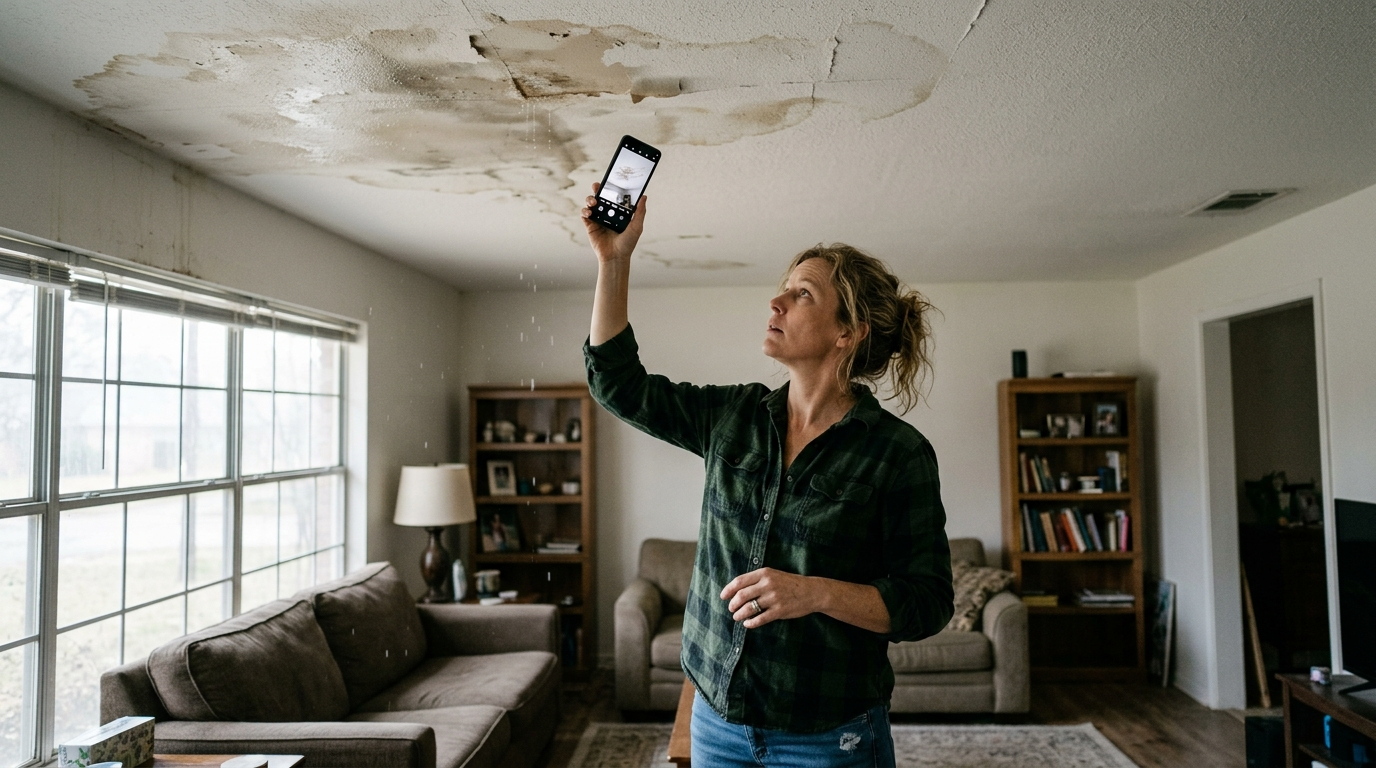
Business interruption insurance replaces lost revenue when a covered loss forces you to close temporarily. A kitchen fire, a burst pipe, or a major roof leak means no revenue, but rent, loan payments, and key employee salaries keep coming. Most BOPs include some business income coverage, but the waiting period and the coverage period are often too short. Look for a 72-hour (or shorter) waiting period and a coverage period of at least 12 months.
Hired and non-owned auto liability
If any of your employees drive their personal vehicles for work purposes, including picking up supplies, making deliveries, or running to the bank, you have an exposure that personal auto policies will not cover. Hired and non-owned auto insurance fills that gap. It is usually inexpensive and frequently overlooked by restaurant owners who assume the employee's personal policy will respond. It usually will not, or the employee's carrier will pay and then seek reimbursement from your business.
Workers compensation
Texas is the only state in the country where private employers are not required to carry workers compensation insurance. But going without it is a poor choice for a restaurant. The restaurant industry has one of the highest injury rates of any sector: cuts, burns, slip-and-fall injuries, and repetitive motion claims are constant. If you are a non-subscriber in Texas and an employee is injured, you lose several important legal defenses and can be sued directly for negligence. For most restaurants with hourly staff, workers compensation coverage is the smarter financial choice even without a state mandate.
Building on the foundation: umbrella and excess liability
Even with solid GL and liquor liability limits, a single serious lawsuit can exhaust your underlying coverage. A drunk driving accident linked to your establishment under the Dram Shop Act, a severe foodborne illness that hospitalizes multiple customers, or a fire that spreads to adjoining businesses can all generate claims well above standard policy limits.
A commercial umbrella policy sits above your primary liability coverages and pays when those limits are exhausted. For most full-service restaurants with a liquor license, a $1 million to $5 million umbrella is reasonable. You can read more about how umbrella coverage stacks with your underlying policies on our commercial umbrella insurance overview.
Special situations: food trucks, catering, and multi-location restaurants
Food trucks
Food trucks in Texas operate under a specific set of risks. Your vehicle needs commercial auto coverage. Your equipment and inventory need inland marine or a food truck property endorsement. Your liability follows you to every location you set up, including festivals, parking lots, and private events. A standard commercial auto policy and a BOP written for a brick-and-mortar location will not cover all of these exposures cleanly. You need a policy (or a combination of policies) written for mobile food service.
Catering operations
Catering adds off-premises liability exposure, liquor service in new venues, and the use of vehicles for transporting food and equipment. If catering is more than a small side revenue line, your insurer needs to know. Many restaurant policies have exclusions or sub-limits for off-premises operations that are not disclosed at application.
Multiple locations
Opening a second or third location also means revisiting your entire insurance program. Each location carries its own property values, its own payroll exposure, and potentially its own liquor permit. Some carriers will write a package policy covering all locations under one policy, which simplifies management and can reduce cost. Others require separate policies per location, which creates gaps if one location's coverage lapses.
How to avoid the most common restaurant insurance mistakes in Texas
Working with small business owners across Central Texas, we see the same mistakes come up repeatedly. Here is what to watch for:
- Underinsuring equipment. Restaurant equipment is expensive to replace. Make sure your property policy reflects replacement cost, not actual cash value, which depreciation can reduce to a fraction of what new equipment actually costs.
- Skipping employment practices liability. The restaurant industry has a high rate of wage and hour claims, harassment claims, and wrongful termination suits. Employment practices liability insurance (EPLI) covers legal defense and damages that your GL policy specifically excludes.
- Not disclosing delivery operations. If you use third-party delivery services like DoorDash or Uber Eats, your exposure is generally limited. But if you have your own delivery drivers on payroll, that changes your auto and workers comp exposure significantly. Failure to disclose can void coverage.
- Accepting the renewal without a review. Your restaurant changes from year to year: new equipment, added revenue, a new patio, a delivery program. Your insurance should keep pace. An annual review with your agent is not optional if you want to avoid a coverage gap at claim time. Our annual insurance review checklist walks through what to look at each year.
- Choosing price over coverage. The cheapest policy in the stack is usually the one that leaves you exposed. Premium is a budget line; a denied claim is a business-ending event.
What restaurant insurance costs in Texas
Premiums vary based on annual revenue, seating capacity, whether you serve alcohol, your claims history, and the specific coverages you choose. These are rough ranges for planning purposes:
- General liability (GL only): $1,200 to $4,000 per year for a small to mid-size restaurant with no alcohol service
- Liquor liability endorsement or standalone: $1,500 to $5,000 per year depending on alcohol-to-food revenue ratio
- Commercial property: Highly dependent on building value, equipment value, and location; $1,500 to $6,000 is a common range
- Business Owners Policy (bundled GL + property): $2,500 to $8,000 per year for a small restaurant with moderate risk
- Workers compensation: Typically rated per $100 of payroll; restaurant class codes in Texas generally run $4 to $8 per $100 of covered payroll
- Commercial umbrella: $500 to $2,000 per year for a $1 million limit above standard coverages
These numbers are starting points only. A restaurant with a liquor license, a delivery program, and $2 million in annual revenue will look very different from a small breakfast diner with no alcohol service and $400,000 in revenue. The only way to get an accurate number is to get a real quote with real underwriting data.
Talk to Winkler Insurance Agency about covering your restaurant
Winkler Insurance Agency is an independent insurance agency serving restaurant owners and small businesses across Central Texas, including Waco, Temple, Killeen, Belton, and the surrounding communities. As an independent agency, we are not tied to a single carrier. We compare coverage and pricing across multiple insurers to find the combination that fits your restaurant's specific risk profile, not a generic small-business policy that leaves gaps in the places that matter most.
If you are opening a new restaurant, adding a location, or just not sure your current policy would hold up in a real claim, start with a conversation. Call us at 254-771-5600 or visit our contact page to request a review or a quote. You can also learn more about the full range of commercial insurance options we offer for Central Texas businesses.
Getting the right coverage takes about an hour of your time. Going without it can cost everything you have built.
Get A Quote
At Winkler Insurance Agency, securing your future is simple. Ready to protect what matters? Contact us for a quick quote!
Kelly
Speak to Kelly 24/7
Microphone ready
Start your custom insurance quote
Instant answers to your insurance questions
Schedule appointments or follow-ups
Personal Insurance
From auto and homeowners to renters and umbrella policies, we help protect your family and property. Let’s find coverage that fits your life.
Commercial Insurance
We customize policies for your industry's risks, like general liability and workers' comp, ensuring you can run your business worry-free.